Nova Clean Liverpool
After death cleaning
Discreet specialist cleaning with an agreed scope for the people managing the property.
LIVERPOOL AND MERSEYSIDE · DISCREET SPECIALIST CLEANING
After death cleaning in Liverpool with careful assessment of affected rooms and personal belongings
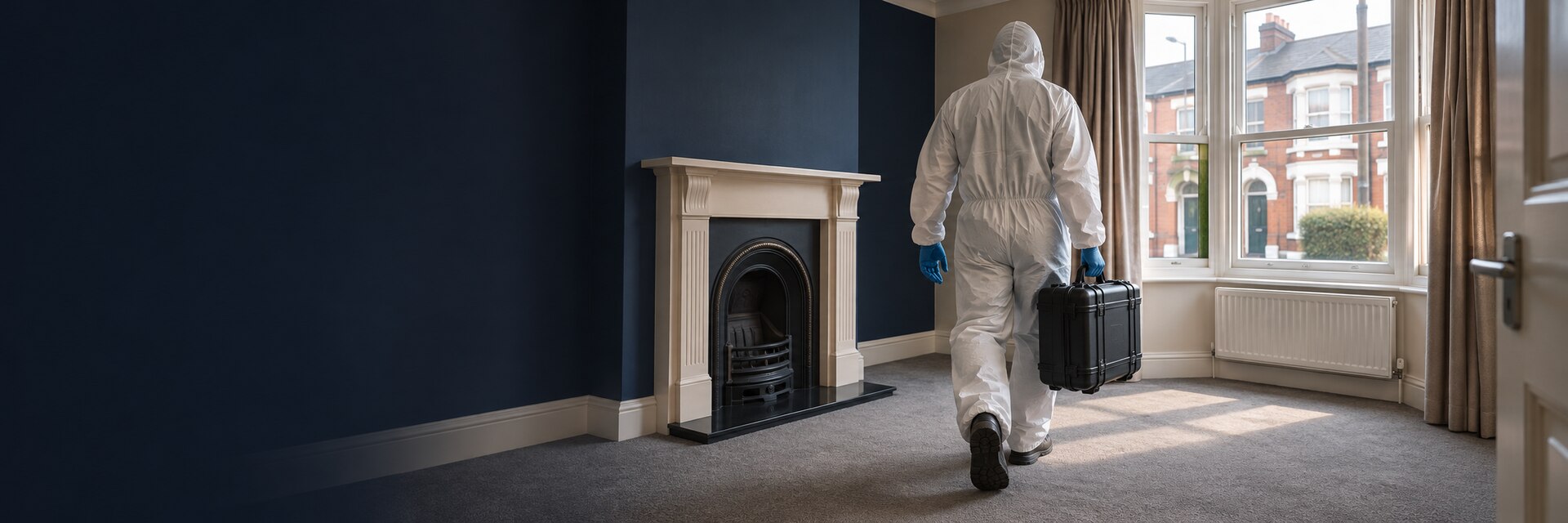
Arranging cleaning after a death can be an unfamiliar responsibility at a difficult time. You may be a family member who needs a room made ready, an executor organising access or a landlord dealing with an affected property. NOVA CLEAN Liverpool helps establish what kind of cleaning is required, which areas need assessment and what information is necessary for a quotation. We keep the discussion focused on the practical work and do not require a detailed personal account where it is irrelevant to the assessment.
A straightforward clean after bereavement and an intervention following an unattended death involve different conditions. The presence of affected furnishings, bodily fluids, odours or concealed deposits changes the scope considerably. Tell us what is known about the property, whether access has been authorised and whether any restrictions remain. If the condition is uncertain, explain that uncertainty rather than trying to inspect an area that may be unsafe or distressing. Photographs can sometimes support an initial assessment, but they are not always sufficient.
Start with authority to enter and clear instructions about possessions
Before a cleaning intervention is arranged, it should be clear who can authorise access and approve the work. A person with keys does not necessarily have authority to dispose of the contents. Where an executor, relative, landlord or managing agent is involved, nominate one contact to coordinate instructions and explain any limits on their authority. If the property remains subject to restrictions from the relevant authorities, those restrictions must be resolved before cleaning proceeds.
Identify personal belongings that should be retained, items requiring a family decision and areas that are excluded from the work. Important paperwork, photographs, jewellery and keys can be difficult to distinguish from surrounding contents when a room is heavily affected. A written brief helps prevent misunderstandings. If clearance is needed alongside cleaning, the quotation should specify what removal includes and how uncertain items will be handled. There should be no assumption that everything in the room is to be thrown away.
Access instructions can matter as much as the list of rooms. If a representative holds the keys, identify who can approve entry, what must be left in place and where any retained belongings should go. When the property also contains a substantial volume of ordinary possessions, house clearance and decluttering can be discussed separately once the specialist areas have been assessed. If long-term accumulation affects circulation or access throughout the property, our hoarding cleaning service explains how a phased plan can be agreed with the person responsible for the premises.
What an unattended death cleaning assessment considers
The assessment looks at the location and extent of the affected area, the materials involved and the relationship between visible deposits and nearby furnishings or finishes. A mark on the surface does not necessarily describe the condition beneath it. Flooring, underlay, furniture and accessible junctions may each need separate consideration. The work should follow the actual findings, with the quotation identifying which areas can be assessed immediately and which may only become visible during an agreed removal stage.
For a flat near the waterfront or in the Baltic Triangle, communal access and lift arrangements may be important. A terraced house in Everton, Anfield or Kensington may require a different handling route because of stairs, corridors or entry steps. A larger home in Aigburth or Mossley Hill can involve several distinct affected rooms and delicate finishes. These details help organise the intervention; they do not imply that a particular building type determines the nature or severity of contamination.
Cleaning and disinfection are distinct parts of the process
Where bodily fluids are present, the proposed treatment must consider both removal of contamination and the appropriate disinfection of suitable surfaces. Product choice, surface compatibility and the conditions of use matter. HSE guidance on decontamination also emphasises assessment of products and the risks associated with their use. This is why an ordinary household cleaning routine should not be assumed to provide the same response as a defined specialist intervention.
The exact method should be explained as part of the scope, without treating every surface in the property as identical. Hard, non-porous finishes can present different recovery options from absorbent materials. Treatment should also avoid moving contamination into unaffected areas through handling or equipment. The plan needs to distinguish the working area, the access route and any items approved for removal. A claim that the whole property has been sterilised is not an appropriate substitute for a clear description of the work performed.
Recoverable materials and items that may require removal
Some affected materials may be suitable for cleaning, while others can be too absorbent, damaged or inaccessible for a reliable recovery approach. The assessment should explain the difference and identify any further inspection needed. A fitted floor covering, upholstered furniture and a painted wall have different construction and treatment limits. The intention is not to promise the preservation of every item, but to make the available options and the reasons behind them understandable.
If removal of a furnishing or floor covering is proposed, confirm the extent before the work begins. Explain whether a retained item has sentimental value even if it appears worn or damaged. Specialist object conservation, repair and restoration may fall outside the cleaning quotation and should be considered separately where necessary. If concealed conditions are revealed, additional removal or treatment should be discussed with the authorised contact instead of being assumed within the original price.
Odour assessment should address the affected source materials
Odour after an unattended death can persist in materials and concealed areas, so the assessment should consider the source rather than relying on fragrance. The first question is what remains affected after agreed removal and cleaning. Where necessary, the scope can then identify further treatment or investigation. The result depends on the nature and extent of the condition, the surfaces involved and what can be accessed. A single treatment should not be presented as a guaranteed answer for every property.
Tell us whether the odour is confined to one room, noticeable in adjacent areas or reported in a shared corridor. These observations can help plan an assessment, but they do not replace inspection of the affected materials. If another specialist is needed for concealed building elements, ventilation systems or reinstatement, that responsibility should be identified. The cleaning quotation should explain which treatments are included and what further decisions may depend on findings during the intervention.
Discretion in flats, shared entrances and occupied buildings
In a block of flats, the work may involve shared spaces used by people who have no involvement in the enquiry. Explain building access arrangements, the person responsible for communal areas and any requirements about the movement of equipment or agreed waste. The same consideration applies to a divided house with shared stairs or a commercial property with neighbouring occupiers. The plan should account for practical access without disclosing unnecessary personal details to other residents.
If someone will remain in another part of the premises, tell us before the appointment so the work can be discussed in that context. Children, visitors and pets should not be assumed to have access to the working area. We can discuss the relevant arrangements with the authorised contact. Personal circumstances and photographs of private interiors are treated as information for the enquiry; they should not be turned into a public account of a completed intervention without a separate, clear agreement.
Photographs and descriptions that support a useful quotation
Begin with the full Liverpool postcode, the property type and the rooms known to be affected. Mention the floor level, lift availability, parking or loading restrictions and whether water and electricity are available for the agreed work. Explain whether the premises are empty or whether belongings remain. Where a visit is needed to understand the scope reliably, that should be discussed before a fixed price is assumed.
If photographs are appropriate, take only those that can be obtained without entering a restricted or unsafe area. Broad views can help show the relationship between affected surfaces and surrounding contents. Avoid including identity documents, private correspondence or other unnecessary personal information. If images would be distressing to take or share, say so during the first conversation. The purpose of the enquiry is to establish the practical cleaning requirement, not to ask someone to document a difficult personal event.
How pricing and scheduling are assessed
The price depends on the affected materials, the extent of contamination, the working time, access and any agreed removal or specialist treatment. The number of rooms alone is not a reliable measure of the work. A small affected area within a furnished flat can involve different preparation and handling from a larger empty room with a suitable hard floor. Conditions beneath furnishings or floor coverings may also require further assessment before the full scope can be established.
Ask the quotation to separate cleaning, disinfection where specified, agreed clearance and any subsequent restoration. Confirm which decisions must be made before attendance and who will authorise additional work if necessary. Availability is assessed against the location and the requirements of the intervention. A request for urgent attendance should explain the practical circumstances, but an enquiry or acknowledgement does not confirm that a particular time has been reserved.
Working with families, executors and property representatives
Different people may need different information from the same intervention. A family member may want to know how possessions will be handled, while a managing agent may need access arrangements and a record of the agreed specification. Keeping one nominated contact helps avoid contradictory instructions. The quotation and any agreed changes should be shared through that person so that the team knows which areas and tasks have actually been authorised.
If an insurer is involved, ask what information is required before cleaning or disposal begins and tell us about those requirements. Do not assume that a cleaning quotation guarantees insurance acceptance or that all reinstatement is included. Retain the agreed scope and relevant communications for your records. Repairs, decoration and replacement of damaged fittings remain separate decisions unless expressly described. A clear distinction between those tasks helps you plan the next stage without confusing cleaning with complete refurbishment.
Checking the completed work and planning the next use of the property
The handover should be based on the agreed cleaning specification and the areas that were accessible. Discuss any residual damage, excluded material and recommendation for another trade. If a room requires further work before normal use, that should be explained rather than hidden behind a broad assurance. The relevant outcome is a documented intervention whose scope and limitations can be understood by the person responsible for the property.
After cleaning, you may need time to make separate decisions about decorating, replacement furnishings or the future of the home. Those choices do not all have to be made during the first enquiry. We can discuss the cleaning requirement for properties across Liverpool, including Wavertree, Toxteth, Childwall, Woolton, Walton, Tuebrook and the city centre, and assess surrounding Merseyside enquiries from their full location. There is no need to disclose more personal detail than the practical assessment requires.
Questions about cleaning after a death
Is every bereavement clean a biohazard intervention?
No. The circumstances and condition of the property determine the cleaning requirement. Describe what is known so the appropriate scope can be assessed.
Can the work be arranged by an executor or agent?
Yes, an authorised representative can enquire. Access authority, instructions about contents and approval of the quotation must be clear before attendance.
Will cleaning include repairs?
Repairs and reinstatement are separate unless the quotation expressly describes them. The cleaning assessment should identify any material damage or further trade requirement that becomes apparent.
Where keys are held by an agent in another part of the city, explain the collection and return arrangements when the visit is discussed. A property representative may also need to coordinate entry with a building concierge or a family member travelling from outside Merseyside. Confirm who should receive updates and who can make decisions if an additional affected area is found. These simple arrangements help avoid unnecessary delays and allow the people involved to manage their own commitments while the practical cleaning requirement is assessed. Instructions can remain focused on the property without circulating private information about the person who died.
Contact NOVA CLEAN Liverpool for a discreet assessment
Provide the postcode and a brief description of the affected rooms. We will discuss the information needed to assess the work and prepare a clear quotation.