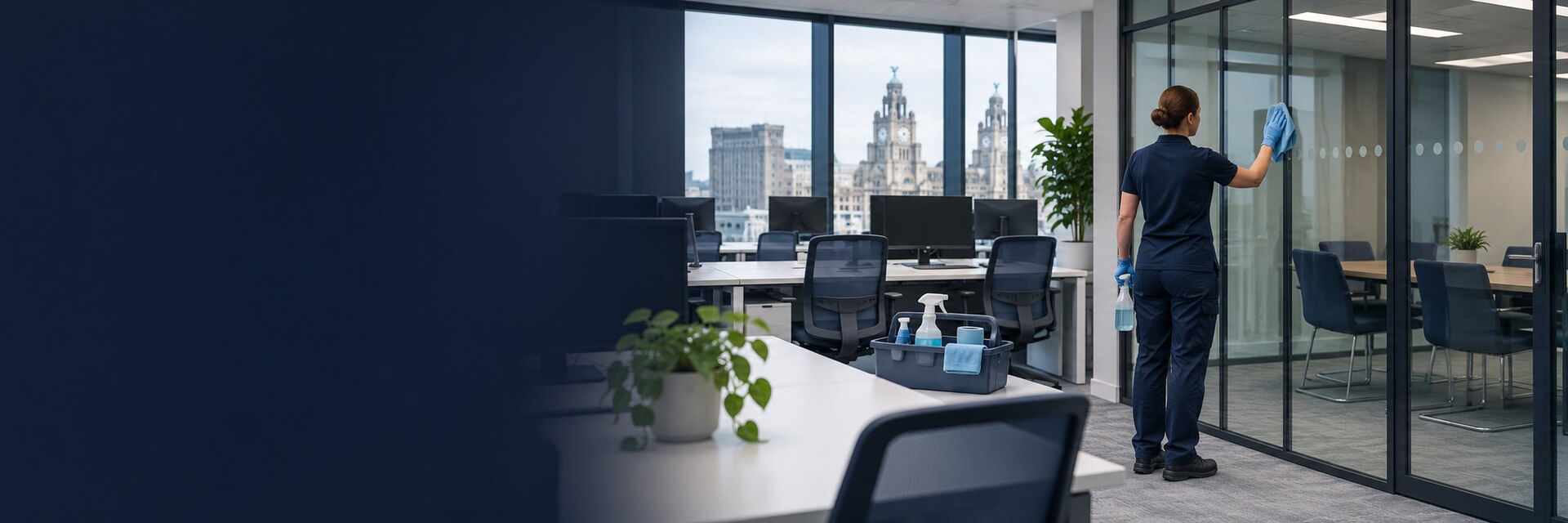
Nova Clean Liverpool
Office deep cleaning
Detailed cleaning for workstations, meeting rooms, flooring and staff areas.
Office deep cleaning in Liverpool for workspaces, meeting rooms and managed commercial premises
The best time to arrange a deep clean is usually when you can identify which tasks the routine schedule no longer reaches. The daily team may keep the kitchen floor and meeting tables presentable while desk bases, partition edges, chair arms and entrance mat wells gradually pick up a very different level of dirt. A recently vacated unit presents another problem, as its furniture may have been removed but the line around the old cupboards and the residue near the kitchenette still need attention. Nova Clean Liverpool plans office deep cleaning around the way your building is used, the finishes in each room and the slots when the work can take place.
Use this service for a one-off clean between tenants, an office reset before reopening, a detailed visit alongside an existing maintenance schedule or work spread across several floors. You can start with the rooms that need the most attention and ask for the rest separately. A facilities manager with an accurate floor plan, a list of problem areas and a few photographs can usually give us a much clearer starting point than a total floor area alone.
Give the commercial brief a shape before asking for a price
Start by identifying the boundaries of the office. A tenant may be responsible for the space behind the access door while a managing agent controls lifts, entrance lobbies and shared toilets. A business with its own building may want floors, a staffed reception, interview rooms, stairwells and a staff kitchen completed under one booking. Specify the included areas and mark anything that needs separate permission. Where the workspace is part of a bigger office building or converted warehouse, our building deep cleaning service can also be scoped for the relevant shared areas.
For each zone, explain whether the deep clean is mainly about accumulated dust and marks or there has been a significant change, such as a rearrangement, refurbishment or long period out of use. Note obvious issues such as a coffee spill against a carpet seam, adhesive around signs, grime in a perimeter floor channel or marks inside an unused kitchen cupboard. Identify what a routine cleaner already does well. This helps keep the visit focused on the work that needs extra time and different equipment.
Workstations, meeting rooms and partitions need a clear desk policy
Staff should know what they are expected to move before the visit, especially in a shared desk area. It is reasonable to ask people to remove personal mugs, cables that are no longer in use, confidential papers and any small items they want to keep in their exact place. There should be a known contact to decide what can be touched if a workstation is still occupied or has been left set up for a later shift. We agree the accessible surfaces, desk frames, under-desk areas and contact points in advance. Sensitive equipment stays in the condition and position agreed with the office contact.
Meeting spaces may include glass or laminate tables, wall-mounted equipment, chair upholstery, painted skirting and glazed partitions. Each can need a different approach. Certain tables show streaks easily under a spotlight while a pane above a meeting-room bench may be difficult to reach. A painted kick plate may have worn through where chairs meet it. When you supply photographs, include the room under its normal lighting and a close image of a concern. That combination helps distinguish removable soil from changes that belong in the maintenance log.
Reception and circulation routes where visitors notice the finish first
A city centre reception can look clean at the start of the day and still have compacted dirt at the edges of a fitted mat or deep marks in the turn between the entrance and the lifts. Identify the position of the mat, the material under it and whether the team is expected to lift and clean it. Ask about the threshold, side panels, desk toe kick and the wall around any hand sanitiser point. Working from the reception into the arrival route can show traffic patterns and help us plan tasks around the people using the main door.
In a live building, agree which corridor or lift can be in use during floor work and who will tell staff about any temporary change of route. The site contact should confirm access arrangements for evenings and weekends, including sign-in, loading, floor access and alarm procedures. Match the work to the normal use of the building and share any areas with restricted access. A clean planned for a business park with its own service entrance may have different practical needs from a building off Castle Street with a short unloading slot and a shared pavement.
Carpet tiles and hard floors should have an assessment of their own
Office surfaces change across a floor plate. Carpet tiles may extend from workstations to a coffee point, although the soiling beside the coffee machine is different from that near a print station. Hard flooring can run through a reception, toilets and a tea point while switching finish at a doorway. Identify the materials if known and tell us what has been applied before, such as a polish, a spot treatment or a protective coating. We assess wear, loose tile edges, open joints and the condition of transitions when selecting a cleaning method.
The nature of the building will determine how a deeper floor service can be carried out alongside other tasks. Textile work should be discussed separately where a whole traffic lane, an old stain or a raised floor may require individual assessment. We offer carpet cleaning in Liverpool and can consider access, drying and whether furniture is being moved before the visit. With hard floors, ask which treatment is proposed and how long affected areas may need before they can be used comfortably. The quote should distinguish a deep clean from refinishing or repair.
Kitchenettes and washrooms benefit from separate time allowances
A small kitchenette can serve dozens of people and gather deposits at splashbacks, cupboard pulls and the edges of the floor. Confirm whether a refrigerator will be emptied, whether the microwave interior is included and what can go back into use immediately afterwards. Make sure there is a shared position for food and crockery while work is under way. Let us know if a water connection is temporarily disconnected or the building has a restricted use tap. Cleaning a staff kitchen also requires a different scope from work in a restaurant or other commercial food preparation setting.
In washrooms, the level of detail required can depend on how many fittings are in the room and what finish the partition, touch points, tiles and floor have. Specify any shower, accessible toilet or welfare facility that falls outside the usual office cleaning scope. Identify mineral marks around taps, deteriorating sealant, a persistent issue with a drain or blocked access, because these can look similar at first inspection. Our quotation can explain which surfaces will be cleaned and which visible conditions may need to be reported to building maintenance.
Plan the visit around your working day, access rights and sensitive rooms
A busy office often works better if it is divided into zones. One quiet floor or a block of meeting rooms can be finished during a slot when it has been cleared, while an operations desk might need a different time. Write down what has to stay in use, which room requires an escort and who can make a decision about a change of plan. If a room needs special supervision or the building uses timed lifts, discuss that with the team before choosing a date. Put the agreed access and alarm procedures in the hands of the designated contact.
For work following alterations, confirm which trades are still operating and when new finishes can be cleaned. A designer or fitter may specify a curing period or a certain product for a new surface. Ask for these instructions and share them with the cleaning team. If building dust or installation residue is the main issue, our after builders cleaning service is more closely aligned with the job. Book around the point when other trades can release the area and the premises are available for a coherent clean.
Examples of office deep cleaning projects around Liverpool
A professional office near Exchange Flags or the Commercial District
A midweek daytime slot may work for quiet meeting rooms while the reception experiences a steady flow of visitors. The agreed plan can separate the glass panels, edge detail and kitchenette from the entrance floor, leaving the latter for a quieter period. Confirm loading from the street, ownership of access passes and whether staff have already been asked to clear their desks. One named contact can manage enquiries from the team instead of several business units each giving a different instruction.
A flexible workspace in the Baltic Triangle
Areas let by the desk or room often have a mixture of flooring, reconfigurable furniture and equipment shared by members. An accurate walk-through should identify fixed partitions, under-seat areas, bookable rooms and the surfaces most affected by drinks or street grime. A daytime visit may work for a bookable room if the reservation calendar is blocked in advance. A reception or popular common area often requires a separate approach outside the busiest time. Collect access details from the person who can deal with late bookings or unexpected visitors.
An empty floor ahead of new occupation
When furniture has been removed, the floor can reveal old wear, storage footprints and soil around the perimeter. Share the outgoing inventory or a schedule of work together with the planned handover time. If a visiting contractor will connect cabling or make good the wall afterwards, identify the areas they will use and decide what should be completed first. A final check with the person accepting the space can record any residual marks or repairs, even where the work itself had a narrowly defined cleaning scope.
What determines the price of a one-off office clean?
The price reflects the number and type of rooms, the time required for detailing, the condition of the floors and fittings and the ease of moving equipment through the property. A largely empty floor with good access may take less time than a smaller office with many occupied desks, storage constraints and restricted cleaning periods. Early morning work, split visits or staggered release by department may change the way the work is quoted. Let us know whether the space is vacant, partly occupied or operating at normal capacity.
Compare quotes by checking whether the same tasks are included. The brief can identify furniture interiors, internal partitions, floors and kitchen appliances separately and explain where a service depends on an inspection. Ask what may change if access is delayed or a material behaves differently from what was expected. For a managed property, identify who is authorised to agree those changes on the day. This makes the result easier to evaluate and protects the time you reserved for the work.
Questions from office managers organising a deep clean
Can you work alongside our existing daily cleaning team?
Yes, where the responsibilities and timing are agreed. Give us the regular schedule, the list of areas still causing concern and any products already used on sensitive surfaces. Sharing that information helps avoid a clean being interrupted or repeated unnecessarily. Inform the daily team which rooms and floors have been treated and explain when they are needed for their next visit.
Can we book a single floor or a few problem rooms?
Talk to us about the minimum scope required, the condition of the rooms and whether furniture will be in place. One difficult tea point, a group of meeting rooms or an entire floor can each have a defined brief. Include any corridor or access route that needs protection and tell us if you expect the team to remove equipment or materials from the site.
Where can you assess a commercial office?
Send the postcode and an outline of the work for a space in Liverpool or Merseyside. Enquiries can cover the city centre, the waterfront, Kirkdale, Speke, Wavertree, Bootle, Huyton and surrounding districts. The postcode, floor number and service entrance details are helpful even before the exact room areas are available.
Request an office deep cleaning quotation
Share your site address, room plan, preferred working window and the issues the visit needs to address. We will use those details to discuss a clear scope and identify any decisions needed before booking.